International human rights law includes the fundamental commitment of states to enable women and adolescent girls to survive pregnancy and childbirth as part of their enjoyment of sexual and reproductive health and rights and living a life of dignity.1 Nevertheless, in 2023, approximately 260,000 women and adolescent girls died due to pregnancy and childbirth-related complications, and the vast majority of these deaths were preventable.2
Maternal mortality remains a critical indicator of health inequity, with disparities conditioned by the Social Determinants of Health (SDH).3 SDH are defined by the World Health Organization (WHO) as the circumstances in which people are born, grow up, live, work, and age, which are shaped by economic, social, and political forces.4 In addition, a large body of evidence shows that living circumstances are further worsened by discrimination based on sex, age, race, ethnicity, disability, caste, religion, and other factors.3,5–7 This background creates conditions that lead to unnecessary and avoidable differences in healthcare offerings, as well as unfair and unjust disparities, which are referred to as health inequities.7
In the context of maternal health, SDH are the social and environmental circumstances influencing healthcare for women from the early development of pregnancy, childbirth, and the postnatal phase.3 These circumstances can markedly affect antenatal care (ANC),8 which is the care delivered by skilled healthcare providers to pregnant women and adolescent girls to ensure the best conditions for women during pregnancy.1
While the connection between SDH and health equity is well established,9 the design and implementation of policies, strategies, and practices to tackle the structural causes of health inequities can be challenging. Exworthy10 argues that some features of SDH undermine the policy-making process, including their multifaceted nature, the need for intersectoral collaboration, the difficulty in establishing cause-and-effect relationships, the dominance of other political priorities, the lack of data, globalization, and the long-term approach required to address them.
These characteristics are also a barrier to policy analysis.11 Health equity forces confront ethical principles that imply moral judgment, inhibiting political and institutional engagement, which tends to remain on biomedical-based problem solving.12,13
Brazil, a middle-income nation in Latin America, played a central role in the Global Commission on Social Determinants of Health and hosted the World Conference on Social Determinants of Health in Rio de Janeiro in 2011.14 This engagement happened in the wake of a re-democratization process influenced by a deep involvement of civil society.15 This background gave the tone for the Brazilian public health agenda during the decade of 2000, strongly oriented toward understanding the influence of SDH on the delivery of healthcare services.14 Regardless of this context and the Unified Health System (SUS) present in the country, the severe inequities within its territory continue to compromise both access and quality of maternal care.16
Brazil is committed to the goal of reducing maternal mortality rates (MMR) to a maximum of 30 deaths per 100,000 live births by 2030.17 Although the country has successfully expanded its maternal health services, with fundamental services like ANC reaching 90% coverage,18 it is still facing difficulties in attaining the MMR target. In the past ten years, MMR was stable at around 60/100 000 live births, with a notable spike during the COVID-19 pandemic, when the MMR in Brazil exceeded twice the goal.19
Studies show that race and ethnicity, living in the North or Northeast regions, being an adolescent, being divorced, having a lower educational level, and having fewer than 4 ANC visits are risk factors for direct obstetric mortality in the country.6 Among the inequities highlighted in the delivery of ANC services are territorial inequalities, with the North and Northeast regions exhibiting lower coverage percentages for prenatal care, delayed onset of prenatal visits, increased difficulties in access, and race and ethnicity, with Black women receiving fewer examinations compared with white women.20–22
Despite the extensive work on gathering data on the correlation between SDH and maternal health, the interaction between the academic community and the political spaces remains limited, affecting the translation of this knowledge at a policy level.23,24 Additionally, a scenario of political polarization and conservative ideologies interfering in public health has set barriers to incorporating SDH-related measures into policy, particularly those related to sexual and reproductive health.25
In this context, content analysis becomes fundamental, as policy documents function as tools through which governments define problems, priorities, allocate resources, and specify actions; analyzing them using an SDH lens can reveal which social determinants are intended to be addressed and which are neglected, allowing identification of ideological and institutional barriers that limit policy effectiveness.
There is a significant gap in the Brazilian literature on content analysis of policies and documents related to maternal health, as existing studies rarely focus on ANC and concentrate predominantly on policy implementation, measuring their impact on health services without conducting systematic content evaluations using standardized frameworks. While Brazil lacks comprehensive evaluations, international experiences offer relevant lessons: reviews in India and Colombia highlighted gender barriers and the need for person-centered, women-focused policy design, demonstrating how content analysis can guide structural improvements that go beyond the individualized biomedical approach.26,27
In light of this context, assessing the integration of SDH related to ANC utilization in public documents and policies can set the ground for debate on how the principles of equity are embedded in governmental actions.28 Given this gap in the literature on the incorporation of SDH into Brazil’s ANC-related policies, this study aims to investigate how SDH are incorporated into policies and documents related to ANC in Brazil, assessing 1) how these documents acknowledge SDH and 2) how they integrate those determinants into system-level objectives and strategies.
METHODS
Coding Framework
To answer these questions, an analytical framework was adapted for this study, structured with an SDH lens to analyze factors influencing the use of ANC.
The framework was based on the analytical framework developed by Fisher et al. 201512 to assess whether policies aim to equitably improve population health and propose actions to address social determinants. It was later adapted by Littleton et al. 202229 for analyzing social determinants of child and youth health in public policies. This framework focuses on policy content rather than policy implementation.
The framework consists of three main analytical categories: policy goals, recognition of evidence, and system-level objectives and strategies related to SDH. Policy Goals evaluate whether general policy goals target overall health improvement, the reduction of health inequities, or specific population subgroups. Recognition of Evidence examines the extent to which policies recognize and incorporate evidence regarding social determinants of health and inequities. System-Level Objectives and Strategies related to SDH identify operational objectives and strategic actions addressing social determinants of health broadly, as well as those relevant to the specific focus of the study.
For the adaptation of the framework, the analytical category System-Level Objectives and Strategies related to SDH was subdivided to distinguish SDH with more direct relevance to ANC utilization (ANCU). This resulted in two sub-categories: General System-Level Objectives and Strategies related to SDH and System-Level Objectives and Strategies related to SDH affecting ANCU.
During coding, we observed that specific system-level objectives related to SDH affecting ANC utilization were rarely articulated in the documents, whereas strategies were consistently present. We then decided to keep in the final framework only the analytical category System-Level Strategies related to SDH affecting ANCU to accurately reflect the content coded. This iterative refinement aligns with recommended practices for framework analysis, allowing categories to be adapted based on empirical patterns in the data.30
To identify which SDH should be included in the ANCU-specific category, a desktop rapid review was conducted to inform the coding framework development. This was not a systematic review, but a targeted search to identify relevant SDH categories. The terms “Social Determinants of Antenatal Care Utilization”, “Social Determinants of Antenatal Care Use”, “Social Determinants of Prenatal Care Utilization”, and “Social Determinants of Prenatal Care Use” were searched in the PubMed and Google Scholar databases.
Predefined inclusion criteria were: papers published in English between 2020 and 2025 containing these terms in the title or in the abstract. Papers were screened by one researcher (MLS). Approximately 50 records were identified. Overlapping records between databases were identified and excluded during screening. Titles and abstracts were screened, and exclusion criteria were applied at this stage. Articles were excluded if they did not address ANCU, focused on unrelated health topics, or did not examine factors influencing its utilization. For records considered relevant, full texts were reviewed immediately, and social determinants of health (SDH) related to ANCU were iteratively extracted and added to a growing list. Thematic saturation was reached after full text review of approximately 18 articles, defined as the point at which reading additional articles no longer provided new SDH. To ensure robustness, an additional set of articles was reviewed, resulting in a total of 25 articles analyzed.
The final set of codes was applied in an deductive content analysis. No new codes emerged inductively during the analysis. The code framework is presented in Table 1 – Coding Framework.
Policy documents selection
This study examines how SDH are incorporated into Brazil’s ANC-related policies and documents. Although SUS operates through a decentralized model guaranteeing considerable implementation autonomy to states and municipalities, federal documents establish the normative framework and articulate the country’s official stance on health priorities. With this, the research question focused on the national level, and federal documents constitute the appropriate unit of analysis.
To find the documents analyzed in this project, a search for public policies related to antenatal care was conducted. In Brazil, strategies concerning ANC are generally embedded within broader policies addressing women’s and maternal health; therefore, documents covering these areas were included in the search. Given the existence of multiple English translations for the same policies and official documents, only materials written in Portuguese were considered.
Because Brazil does not have a specific repository for policies related to women’s health, the search was conducted on the Brazilian Health Ministry’s homepage. For the search, the Portuguese terms “Políticas públicas saúde da mulher” (public policies, women’s health), “Políticas públicas saúde da gestante” (Public policies, pregnant women’s health) and “Políticas públicas, gravidez” (Public policies, pregnancy) were used. The search was complemented in the scientific electronic library SciELO.org, the main source of scientific articles written in Brazilian Portuguese.
The following criteria were used to the selection of the documents: 1) only federal documents were considered, given their national scope and their role in shaping health priorities for the country; 2) the documents must be issued from 2000 on, the period where SDH were consolidated in the country; 3) the documents included are all currently in force to reflect how the ongoing ANC strategy addresses SDH; and 4) each selected document is related or relevant to ANC, either directly or by addressing determinants that strongly influence its utilization. The exclusion criteria were documents focused on individual-level care rather than population-level determinants, and specifically oriented towards biomedical procedures involved in the pregnancy and birth process with limited ANC-specific content, such as technical regulations, reports, programmatic guidelines, and other documents that fall outside the scope of ANC. These exclusion criteria consider that, while technical guidelines can offer insights into service delivery, the primary goal of this research was to assess the extent to which SDH are acknowledged and incorporated into broader system goals, objectives, and strategies in documents related to ANC. Consequently, documents addressing clinical protocols or lacking sufficient ANC content fall outside the scope of investigation.
MLS and LAF conducted the search. Preliminary relevance to ANC was assessed by reviewing introductory sections of each document, with verification through discussion between MLS and LAF. Nine documents were identified for full-text review. Eligibility was assessed against all inclusion and exclusion criteria. Four documents were excluded. Two of them were policy documents that were no longer in force and therefore marginally relevant to the current ANCU context. Two other documents were medical guidelines, without a policy dimension. Five standalone documents remained for analysis: three public policies, one technical note, and one booklet. Figure 1 - Document Identification Process, presented in the Online Supplementary Document, illustrates the document selection process. The documents selected are detailed in Table 2 – Overview of the analyzed documents.
Coding Procedure
For this study, women (teenagers and adult females) constituted the primary population group. In cases where policies addressed broader societal inequities, the analysis focused on how these were framed in relation to the needs and rights of women, particularly during pregnancy and the period of receiving ANC. For example, codes such as Equity groups, Close the gap, and Reducing social inequalities were applied to statements referring to differences among women in relation to race, sexual orientation, ethnicity, socioeconomic status, geographic location, incarceration status, and other relevant factors.
Excerpts of text mentioning or addressing any of the SDH present on the coding framework were then assigned the corresponding codes. When excerpts addressed more than one SDH, all relevant codes were applied.
One member of the research team coded three policies (MLS), while another coded the remaining two (MVO). Following independent coding, the two researchers compared the coding outputs to identify discrepancies in code assignment. The discrepancies and disagreements were resolved in two meetings using a consensus-based approach.
In this approach, most discrepancies and disagreements were resolved systematically through discussions between the primary coders by referring back to the coding framework definitions and the study’s analytical aims. A third team member (LAF) served as a tiebreaker in the rare cases where the team could not agree. The final coding was reviewed by one team member (MLS). The coding procedure was conducted between June and August 2025 using Atlas.ti software.
RESULTS
We present results narratively and along four categories, namely “Policy goals”, “Recognition of Evidence”, “General System-Level Objectives and Strategies related to SDH” and “System-Level Strategies related to SDH affecting ANCU”. Online Supplementary Document shows the quantitative distribution of coded excerpts across the five documents (Tables 3, 4, and 5). The exception is “Recognition of Evidence”, which is displayed here as a Sankey diagram as this format more effectively shows the distribution of the two codes (“Acknowledge” and “Audit”) across the five documents. Table 3 presents excerpts coded as Policy Goals; Table 4 presents General System-Level Objectives and Strategies related to SDH; and Table 5 presents System-Level Strategies related to SDH affecting ANC utilization. Each table highlights the five most frequently coded categories.
1. Policy Goals
Overall, the goals of the policies differ in the extent to which they emphasize equity in health.
The goals of PNAISM address health inequities by proposing actions that aim to reduce disparities across the social gradient, as exemplified in the excerpt: “To contribute to the reduction of women’s morbidity and mortality in Brazil, especially from preventable causes, across all stages of life and among all population groups, without any form of discrimination.” Half of its goals are coded under Equity Groups. They include promoting the health of adolescent girls, Black women, women deprived of liberty, Indigenous women, rural women, elderly women, lesbian women, women survivors of sexual and domestic violence, and women requiring access to abortion care.
Similar to PNAISM, Alyne Network is primarily oriented toward the goals of Equity Groups and Across the Gradient, followed by Average Health. The policy’s goals and principles emphasize equity, focusing on race, ethnicity, cultural respect, and social participation. The goal Across the Gradient also appears in Alyne’s Network guiding principles, reflected in statements such as: “respect for, protection of, and fulfillment of human rights”.
The Technical Note focus on the goal Average Health while also incorporating goals related to Equity Groups, with content related to the aspect of regional inequalities, as in the excerpt: “taking into account ethno-racial and regional inequalities.”
The Program for the Humanization of Prenatal and Birth Care has a single coded goal classified under Average Health, through the expansion of access, improvement of quality, and strengthening the organization of care within the Unified Health System. Similarly, The Pregnant Woman’s Booklet is oriented exclusively toward Average Health, providing information designed to support healthy antenatal and obstetric care.
2. Recognition of Evidence
The documents analyzed vary in the emphasis placed on the recognition of SDH, with only a few providing data to support it. Figure 2 shows the distribution of the codes “Acknowledge” and “Audit” across the documents analyzed.
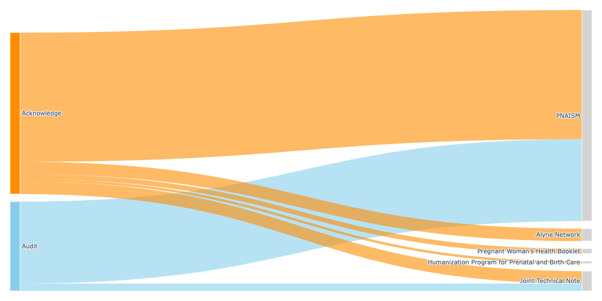
The PNAISM presents the highest number of excerpts coded as Acknowledge, emphasizing normative recognition of inequities, as shown in this excerpt: “Women’s experiences in seeking health services reflect discrimination, frustrations, and violations of their rights, and they often become sources of psychological and physical distress. For this reason, humanization and quality of care involve the promotion, recognition, and respect of their human rights, within an ethical framework that ensures comprehensive health and well-being.”
The policy also provides epidemiological and contextual evidence to justify health priorities, with extensive data on both health outcomes and quality of care among diverse groups of women.
Alyne Network also acknowledges health inequities in its principles, including respect for human rights and promotion of equity with attention to ethnic-racial disparities. However, despite these acknowledgments, the policy does not include excerpts that can be coded as Audit.
The Joint Technical Note provides sections of text coded as Audit to justify updating the previous policy (from Cegonha Network to Alyne Network):
“Despite the organizational structure of the Cegonha Network and international agreements, data from the Ministry of Health’s Integrated Health Surveillance Platform indicate that maternal deaths fluctuated between 2014 and 2023. In 2021, in the context of the Covid-19 pandemic, the number of deaths rose to 3,030, representing a 74% increase compared to 2014, when there were 1,739 deaths.”
The document also acknowledges social determinants such as race, ethnicity and regional inequalities:
“There is a recognized need to update this initiative (Cegonha Network) in order to improve it in light of new technologies, services, and the epidemiological context, with the aim of addressing ethno-racial and regional inequalities associated with the persistence of maternal and child morbidity and mortality indicators in the country. Among the main challenges faced are (…) inequalities among the federative units, the effects of racism on access to and quality of care, the difficulties in carrying out qualified monitoring, and the outdated funding levels of Cegonha Network.”
The Pregnant Woman’s Booklet and The Program for the Humanization of Prenatal and Birth Care acknowledge SDH in fewer excerpts, with no text coded as Audit. The first emphasizes respectful treatment free from discrimination: “(you have the right) To be treated with respect and dignity by healthcare teams, without discrimination based on color, race, sexual orientation, religion, age, or social status; (…) and, to wait for your appointment while seated in a well-ventilated area, with access to drinking water and clean restrooms.”
The second acknowledges the evidence of SDH in one excerpt, where the policy emphasizes the benefits of rooming-in for mothers and newborns, including strengthening emotional bonds, promoting breastfeeding, and supporting continuous newborn care.
3. General System-Level Objectives and Strategies related to SDH
In general, the system-level objectives of the documents related to SDH focus on reducing social inequalities and health service access. The system-level strategies related to SDH adopted are highly concentrated in health service quality and access, and health promotion and disease prevention.
Building on this overview, the following sections describe how these priorities vary across individual documents.
3.1. General System-Level Objectives related to SDH
PNAISM and the Alyne Network included reducing social inequalities as a system-level objective, followed by health service access. The Alyne Network, for instance, commits to ensuring risk and social vulnerability assessment as part of standard care, when it establishes that high-risk pregnancy and postpartum care shall include “reception with risk and vulnerability assessment at all points of care.” It also refers to the use of indicators set by the Integrated Regional Plan, a document that considers the particularities of the country’s regions and aims to promote regional equity and contribute to the realization of bottom-up planning for the SUS. This is the only excerpt containing a reference to indicators that could track the implementation of strategies, including those related to SDH.
PNAISM also included system-level objectives related to health promotion and disease prevention, as clear in this passage: “The Unified Health System shall be oriented to provide comprehensive women’s health care, within an approach that encompasses health promotion, the health needs of the female population, control of pathologies most prevalent in this group, and guarantee of the right to health.” The Joint Technical Note followed a similar pattern to the Alyne Network, with reducing inequalities as the dominant system-level objective.
The Program for the Humanization of Prenatal and Birth Care prioritized health service access and health service quality over inequality reduction. The Pregnant Woman’s Health Booklet contained no coded system-level objectives in this category.
The next section describes how system-level strategies related to SDH are mentioned across the documents.
3.2. General System-Level Strategies related to SDH
Most documents analyzed focus their system-level strategies on Health service quality, except for the Pregnant Woman’s Booklet and the Joint Technical Note, which organize their strategies related to SDH mainly around Health promotion and disease prevention.
Collaboration between health services is addressed primarily in the Alyne Network and the Joint Technical Note. The latter identifies six collaborative strategies intended to support the implementation of the Alyne Network, highlighting the role of health service coordination in this policy framework.
The Alyne Network and PNAISM included the largest number of strategies coded as Reducing Social Inequalities. The Alyne Network also concentrates most of the excerpts coded under Health Service Access, with the majority of its system-level strategies addressing SDH under this domain.
Overall, across all documents, codes related to strategies addressing Community Engagement, Workforce, and Cross-sector activity, appear rarely or are absent. The excerpts coded under Workforce refer primarily to specific health services and do not address training in health inequities. PNAISM is the only document that explicitly mention workforce training, as illustrated in the excerpt: “Technical training of health professionals and staff from services involved in health actions for the use of appropriate technology, humanized care, and educational practices directed toward users and the community.”
Across all documents, strategies coded under ‘Reducing social inequalities’ refer to actions at point of entry and during care delivery.
4 System-Level Strategies related to SDH affecting ANCU
Regarding system-level strategies related to SDH affecting ANCU, Violence against women appeared with the highest frequency across the documents. PNAISM highlights structural, social, and informational factors, particularly violence against women, media access, and racial/ethnic inequities.
The Program for the Humanization of Prenatal and Birth Care has excerpts coded under Media/Information and Violence against women, and, less often, Spousal / Family influence. However, in this policy, in contrast to PNAISM, the excerpts coded as Violence against women focus on explicit orientation to the health workforce to guarantee respectful treatment during care, as illustrated in the following excerpt:
“It is the responsibility of the health service to efficiently manage hospital beds so that women in other gynecological and obstetric situations, especially those experiencing pregnancy loss, do not remain in the same room or ward as postpartum women and newborns.”
The Booklet follows the same approach as the Program for the Humanization of Prenatal and Birth Care, addressing mostly Media/Information and Violence against women.
Both policies do not reference determinants such as Age, Cultural / Social norms, Educational level, Employment / Occupation, Race / Ethnicity, Urban vs. rural residence, or Wealth / Income.
The system-level strategies related to SDH affecting ANCU present in Alyne Network address multiple social determinants related to ANCU, as clearly stated in this excerpt: “The actions of Phase 1 of implementation of Alyne Network include: b. analyzing the health situation of women, children, and families, including demographic and epidemiological data; assessing healthcare demand and supply; and examining regulation, evaluation and control, epidemiological surveillance, diagnostic support, transportation, and identifying critical issues with proposed solutions.”
The policy includes multiples excerpts on violence against women, which is reflected in repeated references to the humanization of childbirth, respect for women’s autonomy, and the protection of human rights. Additionally, this document prioritizes Race/Ethnicity to promote equity, with special attention to racial and ethnic aspects.
Alyne Network contains the highest amount of excerpts coded under Cultural / Social norms. The passages are mostly related to respecting cultural differences. In this policy, other determinants receive comparatively fewer mentions, for instance, Spousal and family influence, which was referenced three times, notably in the following provision:
“The prenatal component shall be organized across different levels of healthcare and is comprised of the following points of care: […] XII. encouragement of the participation of a companion during prenatal care and of approaches addressing the themes of responsible parenthood and men’s comprehensive health.”
The excerpts coded under Spousal / Family influence in Alyne Network follow the same pattern as those in the other documents analyzed and relate to encouraging men’s participation in the pregnancy process and motivating fatherhood.
The Technical Note complements Alyne Network, and focuses on Race/Ethnicity and Violence against women, addressing similar themes with varying degrees of detail.
DISCUSSION
In this study, five documents related to ANC were analyzed to examine how they acknowledge and integrate general SDH and the social determinants of ANCU into goals, system-level objectives, and strategies. The results of this analysis show that the goals and system-level objectives of most analyzed health policies address SDH, and the documents recognize the influence of SDH on health outcomes.
However, key aspects emerged from the analysis: the strategies present in the documents mainly focus on quality and access, covering the post-entry phase of healthcare, with little reference in the documents to cross-sector activities that could address broader SDH; the focus of training programs is not detailed, making it unclear whether they would include content to prepare workforce to tackle SDH effects in healthcare delivery; specific population groups, particularly adolescents, are not explicitly addressed in the strategies; the coded excerpts do not include orientation on how to monitor or evaluate the impacts of the goals, objectives and strategies related to SDH during ANCU.
These gaps mirror findings from other analyses in LMIC, which have shown that policy documents related to maternal and antenatal care often articulate equity, quality, and integration objectives but lack operational guidance, monitoring frameworks, and attention to local social determinants needed to translate commitments into equitable improvements in access and quality of care.27,36,37
Measures emphasizing quality and access can strengthen health systems, especially when designed alongside recognition of structural mechanisms of oppression.38 However, quality strategies observed in these documents often focus on individual-level interactions, such as orienting to treat patients with respect, without specifying how to address institutional cultures that may enable mistreatment, as shown in the excerpts coded under Cultural / Social norms. Combining attention to institutional cultures with individual-level training could complement these strategies to operationalize SDH recognition.39
The documents do not include references to cross-sectoral activities to respond to SDH related to the broader socio-demographic context that shape ANCU. Social determinants such as Wealth / Income, Educational level, Urban vs. rural residence, and Employment / Occupation are minimally addressed. Even in policies that more explicitly engage with SDH, the text contains limited operational guidance. Alyne Network proposes a previous sociodemographic analysis to set up the network. Nevertheless, the policy does not clarify how to use this data to increase equity. The inclusion of or reference to clearer guidance on how to use these data to identify local intersectional inequities may facilitate turning this evidence into equity-focused strategies.40 This pattern aligns with findings from other LMICs. Content analysis of maternal health policies in Nepal and Colombia revealed a similar emphasis on system-level interventions while lacking intersectoral strategies needed to address inequities26,41
Moreover, the analysis of this set of documents reveals a lack of community engagement mechanisms within the policies’ text. As acknowledged by the Rio Political Declaration on Social Determinants of Health,42 participatory processes are crucial to cross-sector collaboration. Such processes enable communication between health systems and communities, providing context-specific knowledge on social and cultural norms that support more responsive and inclusive decision-making across sectors.43,44 In the Brazilian context, institutional mechanisms for community engagement in the health system formally exist, including SUS health councils, 50% of whose members are from civil society.45,46 Explicitly referencing health councils in policies aimed at ANC could reinforce the importance of community participation in tackling SDH.
The texts coded under Workforce, Race / Ethnicity, and Violence against women do not refer to the training of health care professionals on these specific SDH. In the Brazilian context, discrimination such as sexism and racism is structural and normalized in society,47 functioning as key social determinants of health. Evidence demonstrates institutional racism in Brazilian maternal healthcare, including delayed care, shorter consultation times, and discriminatory beliefs about Black women’s pain tolerance, contributing to disparate outcomes.16
Therefore, workforce training to raise awareness of how structural inequities affect health care can be one important policy instrument.48 In the analyzed documents, only PNAISM explicitly highlights the importance of emphasizing humanized care in the training of health care professionals. However, it does not specify which institution is responsible for developing or delivering such training, and the other analyzed documents do not reference PNAISM’s provisions. Including or referencing provisions that specify responsible institutions for guidelines on using health data to reduce inequalities and for incorporating anti-discrimination training into workforce education could strengthen the operationalization of SDH-related strategies within the policies.16
The findings also show that strategies connected with the code Age were minimal in the analyzed documents. The provision of adequate ANC to adolescents is not present, despite the distinct social-demographic barriers this group faces in accessing ANC,49 with disparities by race and region in Brazil. Black and Parda adolescents comprise the majority of adolescent births, with most births occurring in the Northeast and North regions of the country.50 In addition, any sexual intercourse with minors under 14 years constitutes sexual violence under Brazilian law,51 entitling this group to legal abortion, a relevant provision for adolescent care. Including or referring to guidance and intersectoral mechanisms specific to adolescent care in ANC-related policies and documents would address the specificities of this population in policy content.52,53
In relation to monitoring and evaluation mechanisms, the findings of this study show that the content of these documents contains gaps similar to those in other LMICs, such as Ethiopia and Uganda, where policies related to maternal e ANC care similarly articulate equity commitments but lacked procedures to measure the outcomes of the strategies.36 SDH related to sexism and racism demand consistent methods for gathering data on the experience of racism and discrimination.54 Violence against women is addressed through normative language such as respect, dignity, welcoming environments, and the humanization of birth. Still, the documents do not specify procedures to assess the implementation of these commitments. Similarly, the text coded under Race / Ethnicity does not feature concrete standards to monitor the implementation of Race / Ethnicity measures.
One way to address this gap would be to include or reference in the documents instruments to capture disparities through population-based and user-experience indicators.55 Policy evaluation indicators that are consistently applied and consider the views of users can reveal aspects such as access barriers, trust, engagement in the health system, and communication quality.56,57
In its Health Equity Policy Tool, the WHO recommends stratified health indicators for healthcare and service policies that also consider users’ views, for example, the proportion of the population reporting unmet needs for healthcare and the proportion of women of reproductive age reporting unmet needs for family planning services.56 Including these types of indicators could help to assess the strategies related to SDH in these documents.
Given that the policies do not specify SDH-related indicators and Alyne Network relies on those established in the regional plan, future research could examine how each region defines its health indicators and whether these assess the impact of strategies related to SDH and incorporate user-experience indicators. Additionally, to further improve policy content and design, research in the field can investigate how these strategies are implemented at the local level and their relationship with inequality reduction.
This study included five federal-level documents from Brazil. It is essential to acknowledge that in the decentralized nature of the SUS, federal documents have inherent scope limits in addressing SDH across different governance levels. Furthermore, this analysis focused on federal ANC-related documents and excluded national technical and biomedical guidelines, which can contain instructions for operationalization. However, the included documents rarely reference other relevant instruments, reflecting Brazil’s fragmented regulatory landscape in which decision-makers face difficulties navigating where to find applicable operational guidance.
Nevertheless, given the persistently high maternal mortality rates in Brazil and the relevance of SDH to ANC delivery, this qualitative analysis using systematic application of an SDH analytical framework offers insights for researchers and policymakers on the current status of the integration of SDH in these ANC-related documents.
CONCLUSIONS
This analysis reveals that while the documents incorporate and recognize SDH, including those affecting ANCU, in their goals and system-level objectives, the primary focus is on enhancing health system quality and access. Future policies could strengthen SDH integration by including orientation on risk and vulnerability assessment, incorporating disaggregated, user experience health equity indicators, and specifying workforce training provisions that address SDH. Explicit reference to cross-sector mechanisms and community participation structures could further support operationalization of SDH-related strategies.
Acknowledgements
We would like to express our gratitude to Prof. Dr. Clare Littleton for her invaluable intellectual support, particularly in adapting the SDH framework used in this paper to a maternal health context.
Ethics statement
Not applicable.
Funding
This research received no funding from any funding agency in the public, commercial or non-profit sectors.
Authorship contributions
MLS conceived and designed the study. MLS and MOV conducted the content analysis. MLS reviewed the content analysis. MLS drafted the manuscript. LAP contributed to critical revisions and interpretations in all phases of the work. CM provided supervision and general guidance. All authors reviewed and approved the final manuscript.
Disclosure of interest
The authors completed the ICMJE Disclosure of Interest Form (available upon request from the corresponding author) and disclose no relevant interests.
Additional material
This article includes an Online Supplementary Document containing 03 tables and 01 figure.
Correspondence to:
Mariana Lopes Simões
School of Public Health – AG3 Epidemiology & International Public Health / Graduate School “Health Policy and Systems in Uncertainties” (GRASP) - Bielefeld University
Universitätsstraße 25, 33615 Bielefeld,
Germany
mariana.lopes@uni-bielefeld.de