Health systems play a critical role in responding to health challenges. In resource-scarce areas, governments and civil society organizations have developed multisectoral and bipartisan collaborations across all levels to address resource demands and build and strengthen health systems essential for responding to national and global health needs. This is especially true in the case of HIV. Since its discovery, HIV has been one of the most difficult global health challenges, presenting major obstacles to health systems, especially in the global south. In the Sub-Saharan Africa region, for example, where the prevalence of HIV has remained persistent,1 collaborations between governments, international organizations, public-private partnerships, and civil society organizations2 have been critical in achieving key milestones.3,4 While these global health partners have been instrumental in bridging resource gaps and supporting healthcare needs in resource-poor settings, the success of their interventions, especially in HIV and other infectious diseases, has been dominated by global partnerships. Despite their financial dominance, local stakeholders’ collaborations and their networks have been critical to these milestones.5
While HIV/AIDS interventions in low- and middle-income countries (LMICs) have primarily been facilitated by foreign agencies such as the U.S. Presidential Emergency Plan for AIDS Relief (PEPFAR) and the Global Fund, evidence suggests that the capacity of local organizations to coordinate service delivery and implementation has been a key pillar.6–8 In Kenya, for example, civil society’s early role in addressing the HIV epidemic emerged during a time when the government was reluctant to acknowledge the impact of HIV on the health sector.9 Although the Kenyan government attempted to address the HIV epidemic, its efforts were largely ineffective because of an underfunded health system burdened by high demand for capital, healthcare workers, laboratories, and pharmaceutical supplies.10 Consequently, HIV continued to spread, threatening both the public health sector and economic development. This situation prompted civil society organizations to unite to supporting the government in developing HIV management and treatment programs, while leveraging their limited resources by partnering with international organizations on joint activities.10–12
Civil Society Organizations (CSOs) have continued to actively participate in a multisectoral implementation approach to address the disease.13 In the health sector, most CSOs’ activities have included capacity building, providing treatment, care, and support, and participating in the development, design, implementation, and research of various HIV-related policies.14 Notable examples of CSOs in Kenya that have been prominent in the HIV landscape include Amref Health, World Vision, and networks such as the Kenya AIDS NGOs Consortium (KANCO), the Kenya Consortium for AIDS, TB, and Malaria (KECOFATUMA), and the Health NGOs Network (HENNET).15
The role of community-based organizations has been critical in high-burden, rural, and resource-scarce regions, where they have facilitated and increased access to essential health services, including prevention, diagnosis, and treatment opportunities for underserved populations. Pamoja CBO has emerged as one of the leading and rapidly growing community-based organizations (CBOs) dedicated to addressing HIV/AIDS in Kisumu County. Although smaller CBOs, such as Pamoja, have been crucial to the success of global health initiatives, only a few studies have examined how these organizations navigate the complex stakeholder landscape to achieve the health outcomes credited to initiatives such as PEPFAR. With 15 years of experience collaborating with local and international partners, Pamoja CBO serves as an excellent model for community-based health initiatives. Its partnerships with research and learning institutions further strengthen its role in implementing global health and development programs.
Although there is a substantial body of literature on the roles of civil society organizations in healthcare systems, the application of organizational theory, particularly for understanding the position of grassroots organizations in global health, remains limited. Drawing on insights from Pamoja CBO in Kisumu, Kenya, our study used organizational theory to qualitatively examine how smaller community-based organizations navigate the complex global health stakeholder landscape to ensure the successful delivery of global health interventions. Findings from this study provide evidence for building sustainable and equitable global health collaboration and robust healthcare systems.
Contextualizing Pamoja within the Global Health Framework
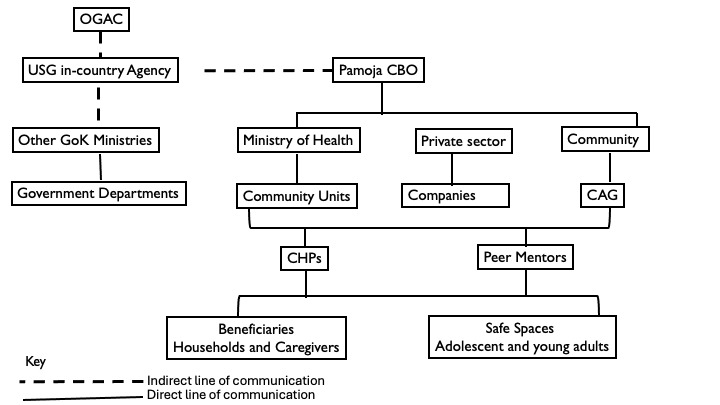
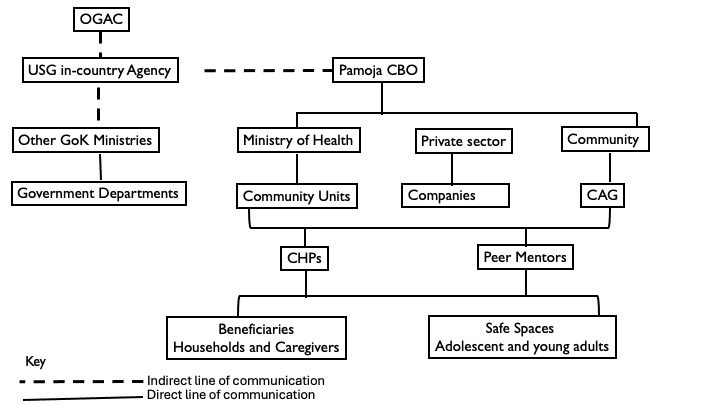
To contextualize Pamoja, a community-based organization, within the global health framework, we first examined its implementation structure by analyzing its relationship with the PEPFAR funding initiative and USG agencies, as well as its networking and workflow across the local government, the community, and the beneficiaries served by the organization. While Pamoja CBO alone has limited reach, its connections with local and international entities offer a unique perspective and opportunity to observe how a single organization can transcend various boundaries to represent a complex global health interface.
In Fig. 1, we illustrate these relationships. In the top-left, OGAC and USG denote global health actors. Pamoja functions as bridge between these international entities, government agencies, and local non-profit organizations, while also linking both groups to the community and individual levels. Understanding Pamoja’s place in the broader global health landscape illustrates how community-based organizations contribute to global health goals. It highlights the importance of stakeholder engagement and collaboration that local entities must undertake to ensure the success of global health initiatives. In this example, USG, through its in-country mechanism, sub-granted Pamoja, providing the necessary resources. However, as a sub-recipient, Pamoja must work with the local private sector, government agencies, and community structures, including community health promoters (CHPs) and Community Advisory groups (CAGs), as well as intended beneficiaries, to achieve the PEPFAR-prescribed program goals.
Organizational Theory: A Contemporary Perspective
Organizational theory is a multidimensional framework that has evolved from classical to modern management. It has been developed through ongoing analysis of the structuring, layering, and functioning of organizations, their interactions with other actors, and their environment over time.16
This paper draws on organizational theory, which examines how organizations function and interact with their environments. More broadly, Organization theory examines processes such as resource allocation, management, and internal structures to promote effective and efficient operation.16 Organizational theory also considers the guiding principles, values, goals, procedures, and politics that shape an organization. Political perspectives are essential for understanding organizations because they highlight the power dynamics that shape resource allocation and stakeholder interests, thereby determining which partners to collaborate with. The focus on stakeholders is especially crucial for understanding the ecosystems and networks in which these entities operate.16
Non-governmental organizations such as Pamoja CBO are diverse and complex entities that exhibit distinct traits to effectively meet the development and humanitarian needs of their constituents.17 For these organizations, stakeholder interests are even more vital because they shape organizational behavior, internal functioning, and external opportunities. Organizational theory thus offers a multisectoral framework for evaluating how these entities address issues affecting their beneficiaries, how they approach these challenges, and how they position themselves for sustainability.18 Central to organizational theory are its key analytical elements, including the environment, culture, social structure, physical structure, and technology. For community organizations implementing global health programs, such as the recently closed USAID projects, these analytical elements reveal an interrelated ecosystem that is often missing from many stakeholders’ analyses.19
For example, analyzing the organization’s environment helps identify internal and external factors essential to effective collaboration with international donors, the acquisition and control of critical resources, and the power dynamics within the stakeholders’ ecosystem.20 Furthermore, understanding organizational identity—how it is formed, maintained, and communicated inside and outside the organization—provides insight into organizational values, governance, and management systems. Organizational theory shows how the creation and communication of identity shape organizational culture, how organizations respond to internal and external stimuli, achieve their objectives, and interact with other entities.21
Although the use of organizational theory in global health is an emerging area, the literature on its role in implementation science is rapidly expanding, particularly regarding its notable significance in healthcare settings, where its application has contributed to understanding the factors that influence successful implementation and the translation of effective interventions into practice.22
METHODS
Study area
The study was conducted at Pamoja Community-Based Organization in Kisumu County, Kenya, from 2023 to 2024. Registered in 2009 by the Ministry of Labor in Kenya, Pamoja Community-Based Organization is a child-centered organization that fosters a supportive environment for community development and provides child protection and well-being. Since its founding, it has worked with more than 35,000 families in Kisumu County. Pamoja’s strategic objectives include a) community health programming, b) water and sanitation, c) food security and environmental sustainability, d) educational programs and training, and e) research and development. Pamoja was a sub-recipient of PEPFAR HIV prevention programs and implemented the orphans and vulnerable children (OVC) project from 2013 to 2025 and the DREAM (Determined, Resilient, Empowered, AIDS-free, Mentored and Safe) initiative from 2016 to 2025. The study focused on Pamoja CBO, a PEPFAR sub-recipient.
While PEPFAR operated under a U.S. congressional mandate, the initiative’s funding mechanism was a complex global funding arrangement involving diverse actors, including partner country governments, the World Bank, and other multilateral institutions. The PEPFAR funding mechanism exemplified a typical global health framework in which high-income countries and their entities controlled the flow of resources.23
Data collection
Participants’ recruitment and inclusion criteria: Participants for this study were purposively recruited because of their prior knowledge of the programs implemented by Pamoja CBO, thereby enabling them to possess unique characteristics, experiences, and insights deemed necessary to answer the research questions.24 Qualitative data collection methods, including in-depth interviews and focus group discussions, were employed to gather information from the organization’s employees and beneficiaries (n = 38). While this sample size was determined following Bernard Russell’s insights into achieving saturation in qualitative data,25 saturation was assessed periodically to determine when no new information emerged, indicating that we had gathered all necessary insights.26 Participants were eligible if they were 18 years or older and were either active employees or beneficiaries of the organization at the time of the study.
In-depth interviews: We conducted 20 interviews, 10 with Pamoja CBO staff members and 10 with local partners, including county government representatives, 60% (12) of whom were male. The interviews took place at participants’ homes and at the organization’s offices. The in-depth interviews focused on individual perceptions and experiences implementing health interventions, perceived organizational strengths and weaknesses, alignment with the organization’s mission statement, collaboration with other stakeholders, and perceived effectiveness of community health interventions.
Focus group discussion: We conducted two focus group discussions with 18 program beneficiaries. Participants comprised 8 males and 10 females who had been participating in the CBO programs for 5 years. We considered five years sufficient to observe changes in organizational policies and service delivery strategies. The focus group discussions were held in a classroom at a community public school. The focus group discussion method proved essential for understanding community dynamics and interactions, such as public participation in health budgets, community mobilization for health services, and community ownership of health interventions, and for assessing the success of these tactics.
All interviews were conducted by two trained qualitative research assistants fluent in both Swahili and Luo, the most widely spoken languages in the area. Both in-depth interviews and focus group discussions covered topics such as participation, decision-making, empowerment, capacity building, and resource mobilization, all centered on community health programming. Participants were interviewed in their preferred language—English, Swahili, or Luo. Sessions lasted approximately 1.5 hours and were audio-recorded.
Specifically, the interview protocol captured interests, beliefs, community groups, access to services, information sharing, ecosystem perspectives, and advocacy. Similarly, the FGD protocol captured questions about inter-organizational networks, collaborations, and cooperation; organizational values and practices; stakeholder involvement in service delivery; communication and knowledge-sharing practices; program evaluation; and the challenges encountered.
Data analysis
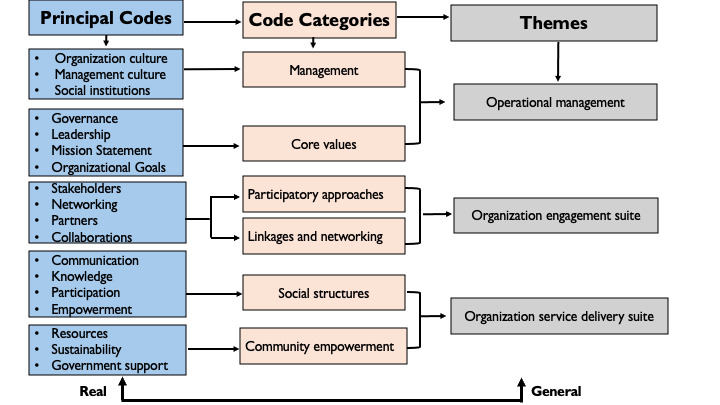
Our data analysis was grounded in Gioia’s approach to qualitative research,27 which emphasizes rigor in data collection. The Gioia methodology is a three-step, iterative approach that begins with the creation of analytic codes, followed by the creation of categories, and uses both inductive and deductive approaches to yield theoretically informed themes and findings rich in participant narratives.28 We followed a step-by-step procedure to ensure fidelity to Gioia’s approach to data analysis, as outlined below.
Step 1: In the first step, we aimed to verify the quality and accuracy of the transcription: one of the authors (P.M.O.) listened to the audio recordings and compared them with the transcription, noting any variations in translation, tone of voice, pauses, or laughter. This step was important for documenting the context in which words were spoken. These notes were later converted into memos and served as guidance for the coding process.
Step 2: In the second step, author 3 (W.O.O.) identified frequently used words in each transcript. Each transcript was reviewed independently, and frequently occurring words were identified while ensuring consistency with the translated versions. We then used these to create keywords (Table 1).
Step 3: In the fourth step, we verified the keywords through a consensus dialogue with selected research participants to ensure we did not miss or misinterpret anything. We then used the keywords to develop and refine a codebook (Table 2), which we imported into ATLAS.ti to aid further analysis.
Step 4: Before starting the coding process, the authors (E.O.O., P.M.O., and L.A.O.) carefully reviewed the keywords against the transcripts. They then proceeded with deductive coding, paying close attention to the narratives of the first-level participants.
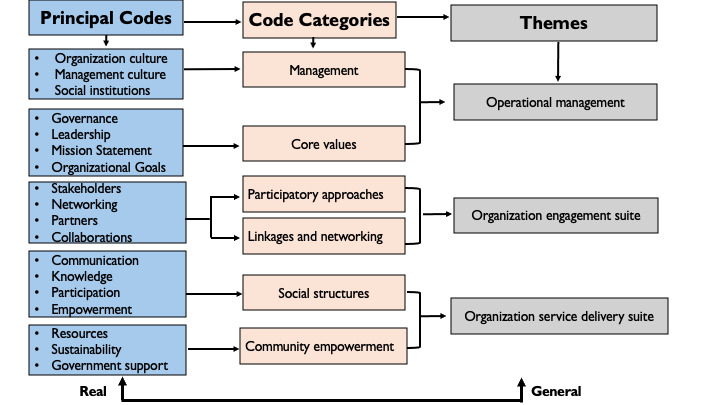
Step 5: Using the theoretical perspective on organizations, informed by the authors’ own experience, and drawing on the literature, we conducted a second-level analysis, in which we reflected on the codes and keywords. Codes were then merged, subdivided, and transformed into categories, where they were further examined for patterns and emerging themes (Fig 2).
Step 6: To ensure intercoder reliability, W.O.O. reviewed the coded transcripts. Then, P.M.O., L.A.O., W.O.O., and E.O.O. jointly reviewed and refined the codes, merging or splitting them as per Gioia’s methodology.
Code categorization
To generate categories and an initial list of themes, we performed code categorization by merging or splitting parent and child codes. To reach consensus, all co-authors were asked to review the list of themes, offer comments, and confirm the meanings.
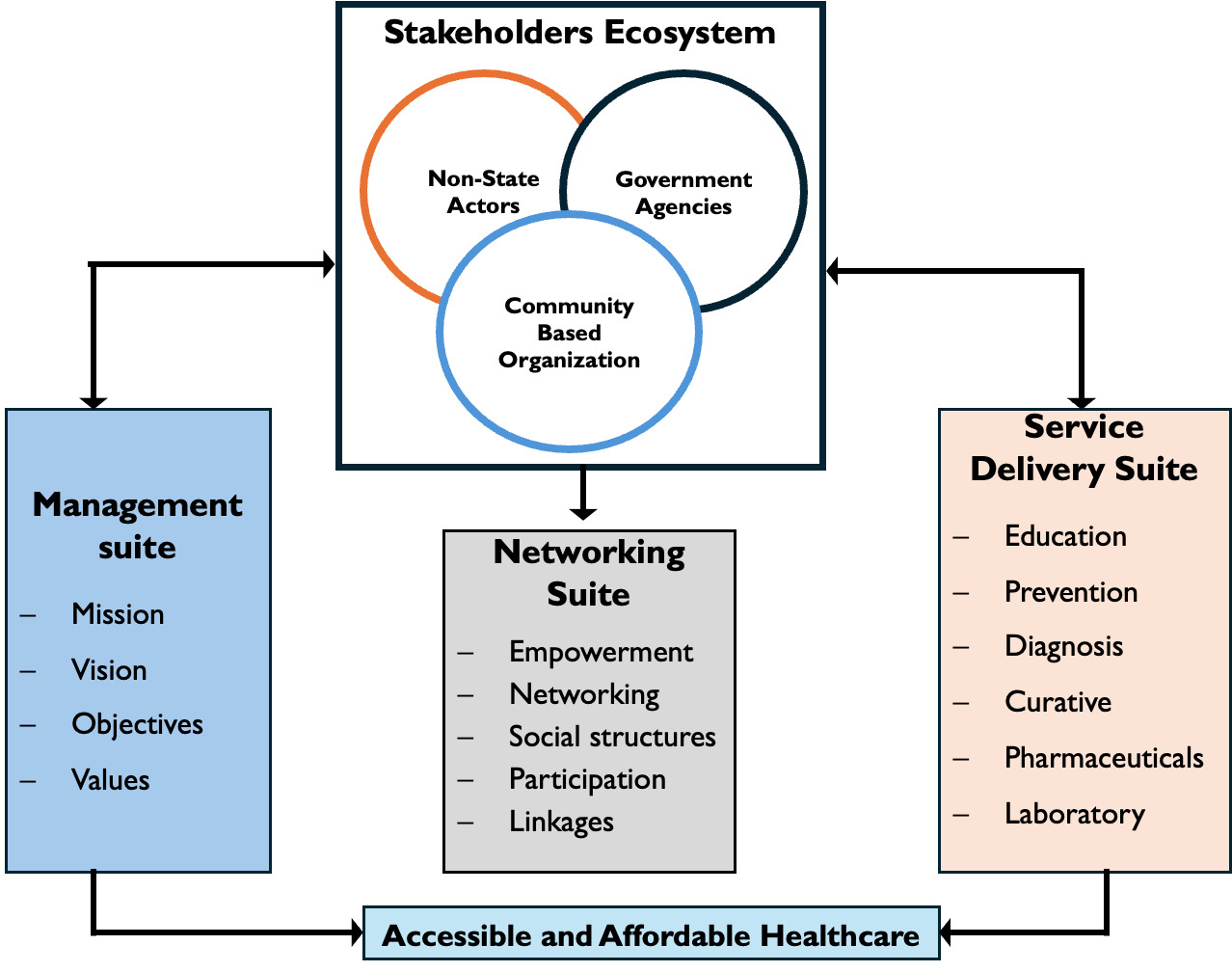
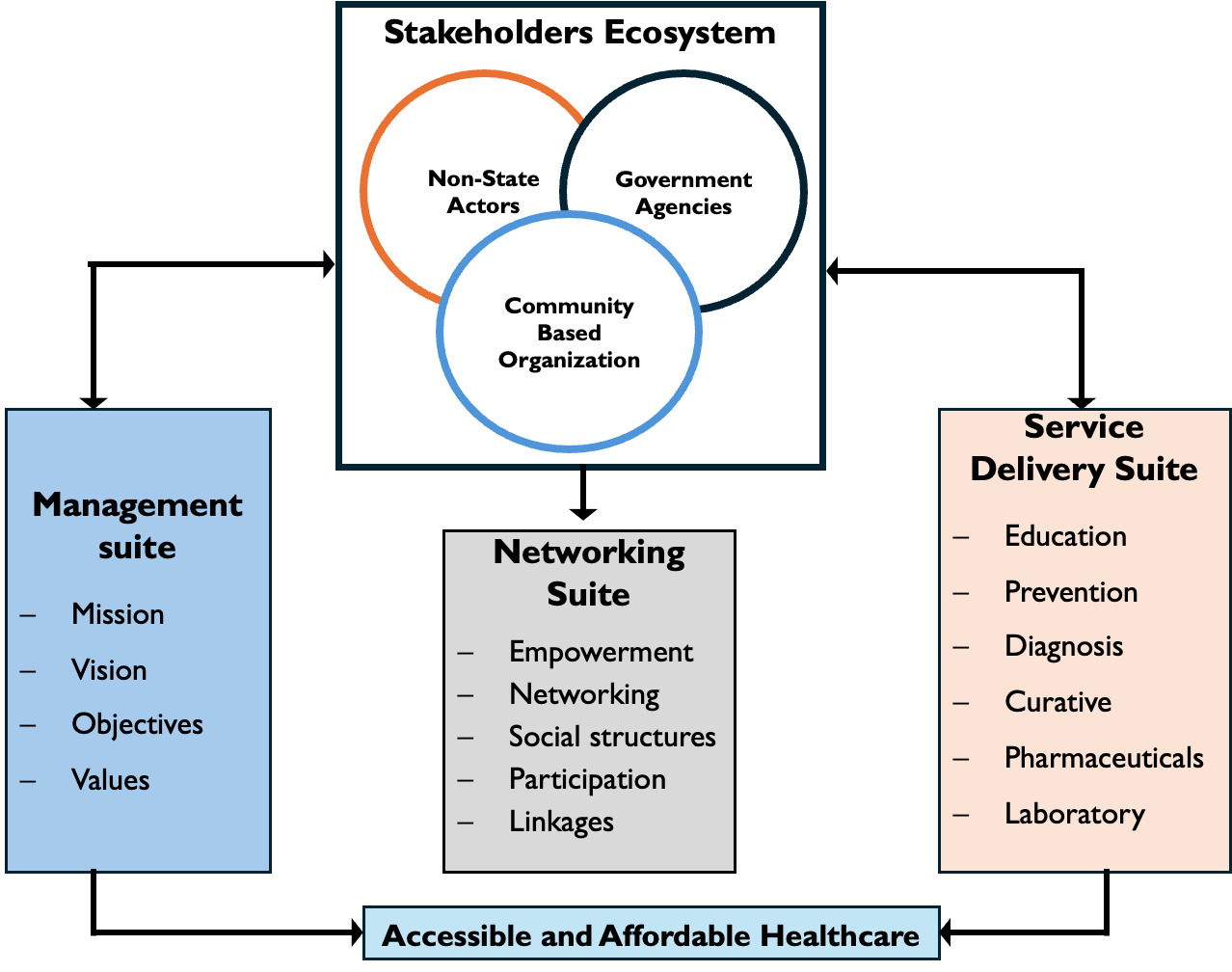
Using the themes, we created a conceptual framework (Figure 3) that shows how these themes intersect and interact with the stakeholder ecosystem—including non-state actors, government agencies, and community organizations—to affect health care accessibility and affordability. Additionally, we analyzed and mapped the activity levels of grassroots organizations within this ecosystem, aiming to understand how groups like Pamoja CBO can utilize their internal strengths, counter external threats, and navigate the complex stakeholder landscape to implement global health interventions.
Ethics approval and consent to participate
This research was conducted in accordance with the Declaration of Helsinki. The Amref Health Ethics and Scientific Review Committee (ESRC) in Kenya granted ethics approval for the study under protocol number AMREF-ESRC P1396/2023. After thorough discussions with potential participants, we obtained written informed consent from all participants before enrollment. Participation was voluntary, and participants’ information was anonymized and kept confidential. Each participant received reimbursement of up to KES 500 (USD 5) for transportation costs incurred during interviews or discussions.
RESULTS
This section summarizes the findings, providing a brief overview of the participants’ demographic characteristics, keywords, emerging themes, and participant narratives. 20 (53%) of the participants were male. The mean age was 41, the median age was 29, and the age range was 30. Women participants in the beneficiary category were 52%, compared to only 40% among CBO staff members and other partners. All 20 participants from the staff and partners had college degrees. However, in the beneficiary category, none had a college degree, and only 7 (40%) had a high school diploma.
Emerging themes
We identified four themes, including a) stakeholder ecosystem, b) organization management, c) organization service suite, and d) healthcare delivery. We found these themes interrelated and intersecting in determining the effectiveness of the organization’s programs, including accessibility and affordability of healthcare services.
Stakeholder ecosystem: This refers to the actors within the environment in which the organization operates, including non-state actors, government agencies, and other community-based organizations. The stakeholders’ ecosystem strongly influences the organization’s operations, including management, networking, and service delivery.
Organization management suite: This theme focused on the organization’s mission, vision, objectives, and values, which served as the foundation for all initiatives, including resource mobilization, implementation strategies, and assessment and evaluation protocols. However, these dynamics were shaped by the internal environment, including individual behaviors, perceptions of their roles within the organization, and adherence to its values and guiding principles.
The organization engagement suite: This theme emerged from the services the organization offered and relied primarily on management’s ability to network and mobilize resources. The service suite, in turn, influenced the organization’s relationship with stakeholders and the stakeholder ecosystem. For instance, the organization’s ability to deliver effectively sometimes relied on capacity-building by other stakeholders, its program delivery history, its participation in other stakeholder-relevant activities, and the leveraging of social structures and linkages within the established stakeholders’ ecosystem. The organization engagement suite and its components proved to be key determinants of service delivery, impacting health outcomes in various ways. In Table 3 below, we describe the code categories and illustrate how we perceived their manifestations.
Organization service delivery suite: This theme emerged from management’s interactions with the healthcare system during service delivery. It was largely shaped by the stakeholder ecosystem. For example, health-related services depended on a functional health system capable of delivering preventive, diagnostic, curative, pharmaceutical, and laboratory services.
The long-term effects of stakeholder actions and reactions on organizational success are highly impactful on service delivery. Our approach is to incorporate qualitative insights from organizational theory to examine health program actions and engagement strategies, particularly when engaging different actors with varied values, interests, and access to resources and influence, such as community organizations and international donors.
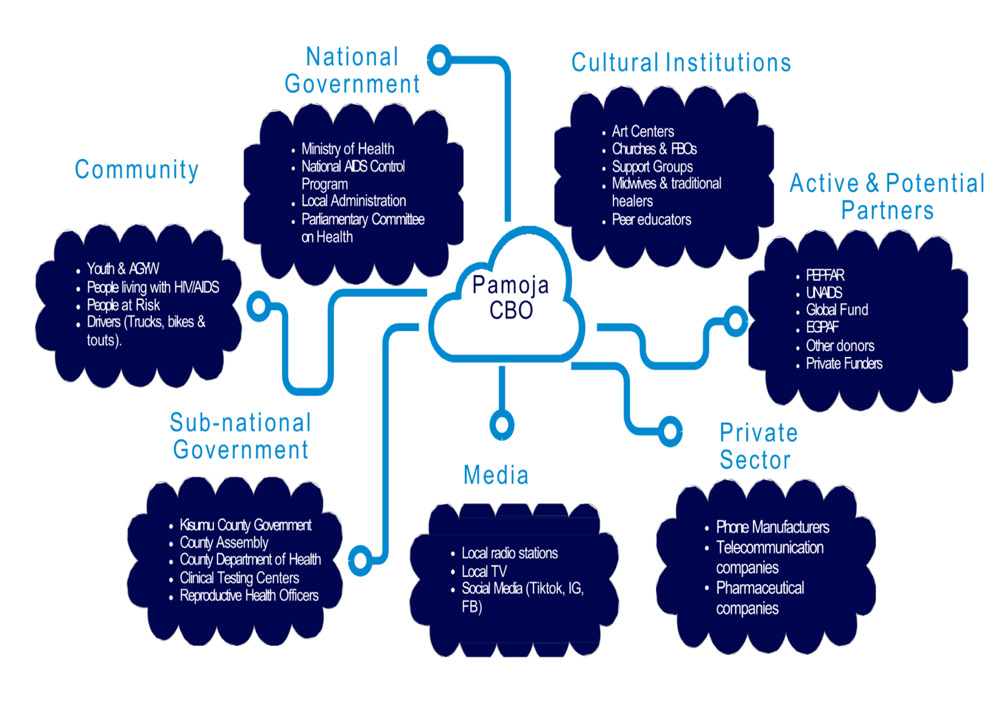
To understand how small community organizations operate within the stakeholders’ ecosystem, we analyzed how these themes intersect to provide functional, accessible, and affordable healthcare in resource-limited settings. Our mapping of the Pamoja Community-Based Organization revealed a complex web of networks and collaborations. These connections were crucial for resource mobilization, including funding, technical support, visibility, and sustainability.
In Figure 4, we illustrate the organization’s position and the relationships it formed within the stakeholders’ network to deliver on its core services.
_in_a_stakeholders_network_map__within_the_contex.png)
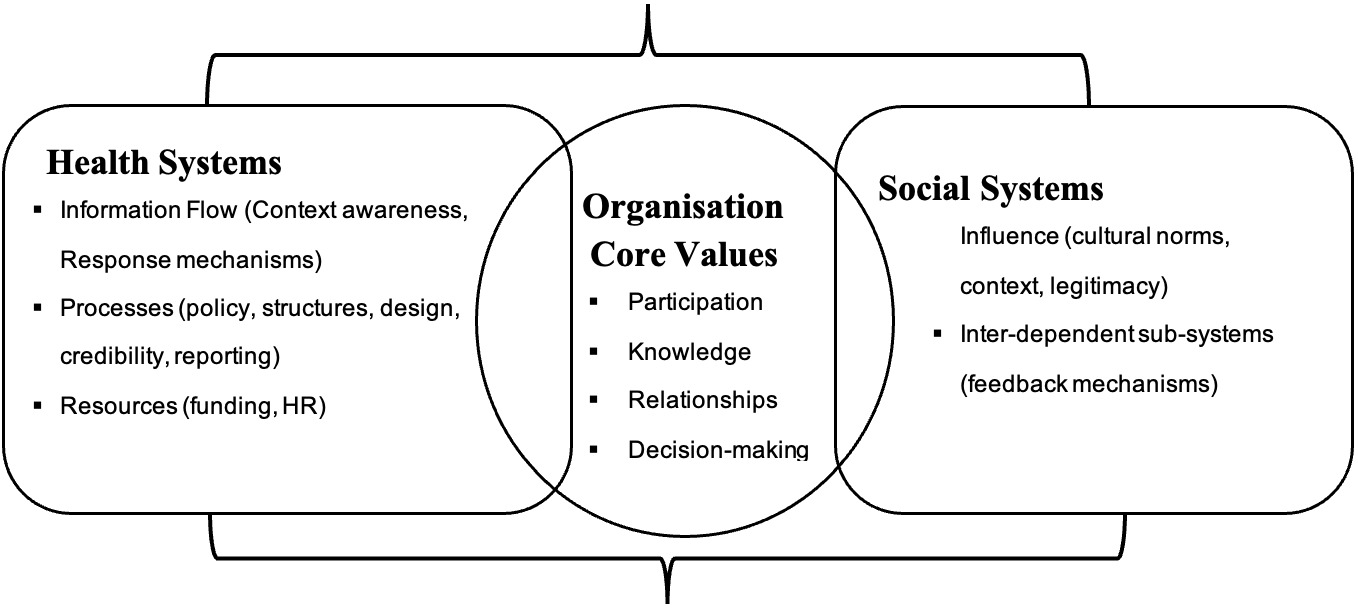
Additionally, we examined how organizations’ core values intersect with healthcare systems and social systems to navigate the stakeholder ecosystem. We noted that core values were central to leadership and influenced its networking capabilities and effectiveness in fulfilling donor commitments or establishing sustainable service delivery (Fig 5).
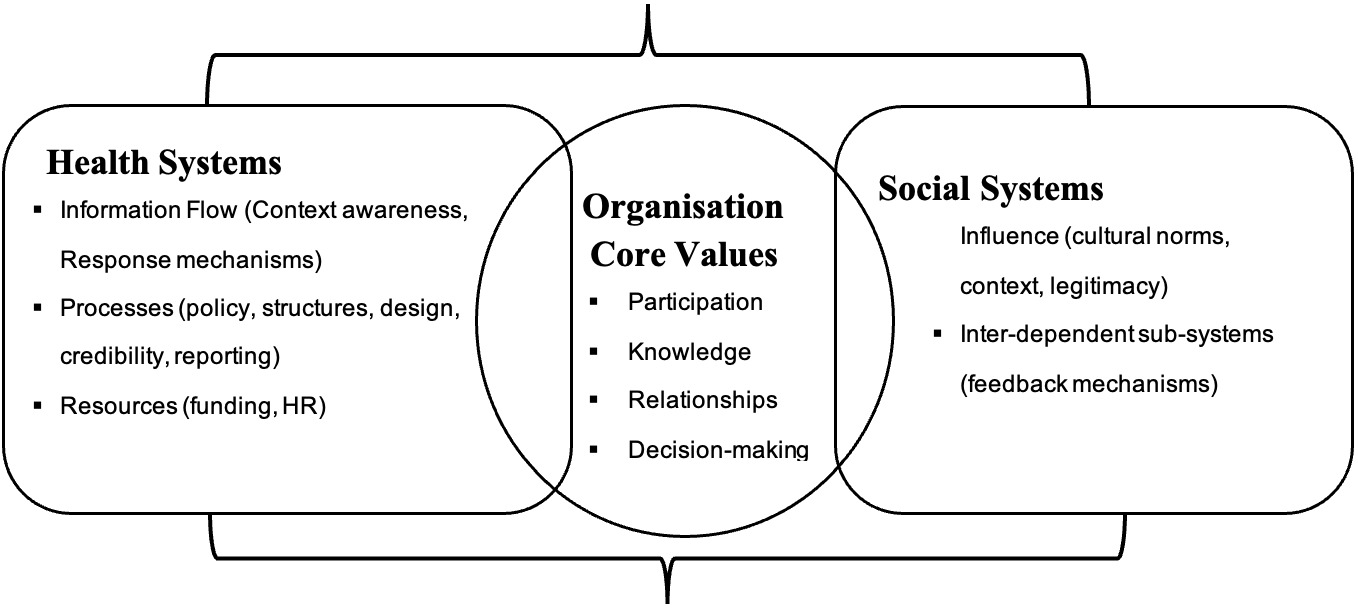
In recent years, adaptive and networked organizing has emerged as a core function of effective management processes in organizational leadership.30,31 Thus, leadership’s networking ability is necessary to respond to the increasing complexity of health ecosystems and socio-economic demands.32 Here, we illustrate how an organization’s core values intersect with health and social systems to influence service delivery, networking, and functionality. In this framework, core values – objectives, vision, and mission statements – influence participation, knowledge, and relationships. Health systems encompass information and service flows, processes, and resources. The social system combines cultural norms and social institutions. For successful global healthcare programming, local organizations must achieve harmony within these domains. Within the community, harmonization can be improved by fostering collaboration, building networks, and developing interdependent relationships. Despite their dynamic and complex nature, both Global and Community Health systems remain interdependent (Fig 5).
Linkages and networking
Our findings indicate that, to deliver the services, the organization had to strengthen its capabilities. To do so, it sought to collaborate with other stakeholders, primarily government agencies and other local partners. This collaboration ensured access to technical assistance beyond the reach of the global funding mechanism or external donors. While government agencies have been reported to play both technical and funding roles, external donors often overlook this critical role, which provides the infrastructure these organizations need to deliver services. In the case of Pamoja, for instance, the National AIDS and STI Control Program (NSACOP), which oversees HIV initiatives, granted Pamoja access to various HIV and AIDS behavior-change training programs, enabling the organization to successfully deliver HIV-related services.
Although most of our major donors are international, internal government funding remains crucial to our operations. For instance, support from the NASCOP has provided access to government training opportunities. We have leveraged these opportunities to build extensive networks and collaborations with other organizations that provide technical training across various areas, thereby supporting our programming and service delivery. (IDI, CBO employee, 39-year-old female).
Furthermore, we found that within the stakeholders’ ecosystem, close network partners played a crucial role in providing the technical services the CBO needed to deliver, some of which donors did not prioritize for funding. For example, our conversation with a representative from the Ministry of Health revealed that medical services requiring the Ministry’s approval and support often relied on government backing. Additionally, a representative from the Children’s Directorate under the Ministry of Labor and Social Protection described their role in providing child safeguarding policy guidelines and training to organizations to support their work with children.
We collaborate with Pamoja CBO to provide medical services at community safe spaces. As a government ministry, we ensure adherence to standards and the delivery of professional services. Our department has conducted numerous outreach activities, including HIV testing and counseling, provision of pre-exposure prophylaxis drugs, and distribution of contraceptives within the community. Such support is only achievable through robust community networks and ownership, as exemplified by Pamoja. (IDI-government representative-37-year-old-female).
Children’s issues can be quite complex, involving families, community leaders, the government, and many partners working together. When challenges like abuse occur, it’s important to work closely with partners like Pamoja, who can facilitate crucial referrals, including covering medical expenses. Our department is committed to ensuring that all organizations serving children have up-to-date child safeguarding and protection policies. We also focus on building capacity by providing training for project implementers and offering ongoing supervision and support. (IDI – government representative, 45-year-old male).
At the beneficiary level, we observed that CBOs providing services—either directly or through partner organizations—expanded their use of community groups, such as advisory or support groups, to improve accessibility, facilitate knowledge sharing, and boost mobilization. However, the success of this coordination was linked to the CBO’s level of involvement and its perceived local institutional presence. This presence is a key strength for grassroots organizations and an essential part of service delivery that the donor community overlooked.
Thanks to insights from community leaders, we have a clear understanding of available services, their schedules, and eligibility. These leaders work closely with the CBO to determine eligibility, which has helped minimize misuse. We also greatly appreciate the support from the area assistant chief, who helps us coordinate resources among partners. For example, in the school fee subsidy programs, the chief’s office keeps us informed about which partners have provided support to whom, ensuring that everything is distributed fairly and transparently. (IDI, CBO-employee -42-year-old-male)
Participatory approaches
Participatory approaches emerged as a key way for the organization to engage the community, both for feedback and for service delivery. Although these approaches were not officially prioritized by funding agencies, the organization often exceeded its planned activities by involving relevant stakeholders and community leaders, sometimes overstepping donor regulations. Program officers described their community engagement strategy during the planning phase as inclusive; they particularly emphasized collaborative community meetings that brought together diverse stakeholders.
We hold many community meetings where everyone identifies gaps. This process empowers the community to voice and prioritize their needs in light of their strengths and fosters a sense of ownership of the programs we implement. Importantly, these meetings are not limited to Pamoja; we also invite local stakeholders to participate. This strategy has been effective in securing additional resources. (IDI, CBO employee, 34-year-old male)
Moreover, our findings revealed that sector-wide participatory platforms that involve beneficiaries, government officials, and other stakeholders play a crucial role in promoting accountability and transparency. These platforms proved advantageous for both CBOs and their beneficiaries in various ways. For CBOs, these forums provided not only opportunities for publicity and visibility, crucial for resource mobilization, but also avenues for feedback from other partners. For beneficiaries, these platforms provided an opportunity to hold partners or service providers accountable and to advocate for increased resources and services. While accountability is essential for organizations, particularly to secure donor approval and funding, for grassroots groups it fosters acceptance and ownership of interventions, helping them better align with donor interests.
Public participation activities are deeply rewarding. Since joining Pamoja CBO, I’ve participated in about 3 events. I especially appreciate the increased visibility organizations gain. For example, a community member might ask a question, giving us the opportunity to respond publicly in the presence of other organizations and funders. This enhances our organization’s visibility and helps strengthen existing partnerships or develop new ones (IDI-CBO-employee-38-year-male).
We always look forward to public participation activities because they give us the opportunity to meet with county officials and community organizations and to provide feedback. Some individuals may dislike our directness or our pointing out issues, but honesty is essential. As community advocates, we must hold organizations accountable (FGD, community member, 49-year-old male).
Leveraging existing community and social structures
We asked how the organization leverages existing community structures to promote development and service delivery. The program officers reported that, during implementation, focusing on the family unit emerged as a key structural factor shaping individual involvement in various development initiatives. Furthermore, the officers discussed their interactions with opinion and political leaders. In this context, organizations cultivated opportunities for continuous behavior change while engaging directly with individual families. This close proximity to families transformed global health programs into household discussions, further facilitating uptake.
We leverage community resource persons who emphasize the importance and respect for their institutions, thereby making their involvement in community activities visible. For instance, our community elders help mobilize both material and non-material resources, including raising awareness to address cultural issues that hinder the uptake of health services. (IDI, CBO employee-35-year-old-female)
The effectiveness of interventions involving partners such as the Ministries of Health, Education, and Agriculture relied on government administrative structures, inter-ministerial coordination, and active community engagement. A government official from the agriculture department shared their experience, emphasizing the role of community-based organizations.
In my experience, government offices are particularly effective at coordination and mobilization because their authority enables them to respond more efficiently to specific requests. For example, when promoting the adoption of certain seeds or encouraging changes in practices, we work with community leaders and CBOs during field education days. Nonetheless, for these efforts to be sustainable, civil society organizations must remain actively involved. Recently, we observed the CBO distributing seeds and supporting government officers in field supervision (IDI: government representative, 43-year-old male).
Continuous community engagement and education
We found that organizations sought to strengthen their community empowerment strategies by integrating capacity-building and educational activities across their efforts. For example, several training sessions were held to help community members develop key project management skills, including forming community working groups, which received ongoing management and project-tracking training. One project officer commented on this. Although the donor community highlighted sustainability, it did not specify resources or budget allocations for capacity-building efforts in the host communities. Thus, grassroots organizations’ initiatives, often funded from their own budgets, continue to facilitate global health interventions by offering continuous learning opportunities.
We encourage community members to actively participate in public awareness efforts and to use public services. Community leaders, in collaboration with the Ministry of Health, organize initiatives such as dialogue sessions and action days, with the Ministry providing technical support. This strategy fosters collaboration among the organization, the community, and the Ministry of Health. It also facilitates meaningful involvement of community members and stakeholders in health service delivery (IDI, Project Officer, 32-year-old female).
Our findings also showed how information is disseminated from technical officers to community members who lack specialized training. These learning channels have enhanced the community’s knowledge of various health topics. As one community member and participant noted, a multi-layered network and coordination support community education, further facilitating acceptance and uptake of global health programs.
One thing I am truly proud of is my understanding of health issues, particularly HIV prevention. We’ve organized numerous community training sessions and workshops where CBO officers and health officials visit safe community spaces to educate residents. Additionally, our community health volunteers frequently visit households to raise awareness of various topics (FGD: Program beneficiary, 36-year-old female).
We also found that collaboration between the CBO and other partners enhanced the capacity of CBO staff and community leaders. For instance, one CBO staff member noted that their internal training sessions drew on contributions from government ministries and partners across sectors. As a result, they could deliver improved services and accurate information to their beneficiaries. These additional training sessions often came at the organization’s expense, were classified as non-essential expenditures not covered by donor funding, yet remained highly critical to service delivery.
Our internal initiative, ‘Continuous Community Education’ (CCE), focuses on keeping us informed about recent developments across multiple topics. We rely largely on government officials and other stakeholders to lead these training sessions. These field practitioners and specialists frequently visit our offices to deliver training. We also encourage community members to attend these sessions. (IDI: CBO employee, 38-year-old male)
Our results also showed that for the government and other partners, training and capacity-building activities provided opportunities to learn from community events and helped ensure consistent, standardized information. However, these training efforts required coordination among stakeholders, underscoring the importance of stakeholder communication and revealing an intricate network of stakeholders on which these organizations relied to deliver on their mandate, including donor-funded global health interventions.
We value it when community partners, such as the CBO, include us in their training programs. This helps us standardize and unify the information shared with the community. Supporting these capacity-building efforts helps ensure adherence to current guidelines and benefits community members. Additionally, we learn a great deal, including how to identify myths and misinformation and develop strategies to address them. (IDI-government officer – 45-year-old-female)
It is important to stay up to date on field activities, including which training manuals the partner uses and whether they are approved. To do so, we need to communicate with other community partners. Since we serve the same community, coordinating our efforts is essential (IDI-Community partner – 52-year-old female).
Organizational challenges
Restricted donor funding, community expectations that exceed the organization’s capacity, and insufficient human resources were identified as both internal and external challenges hindering the optimization of program outcomes. In this context, we identified several issues that hindered the organization’s ability to provide effective services and realize its vision. Specifically, in its efforts to deliver health programs to the community, the organization reported numerous obstacles, including insufficient staffing and limited operational resources. One CBO employee shared her experience.
Our team is currently overwhelmed and unable to meet service demands effectively, including project oversight and follow-up. This is worsened by strict donor funding, which limits innovative solutions. As a result, we must rely on external partners to handle activities beyond our capacity. Moreover, we operate across a vast region with challenging terrain, which limits our organization’s efficiency in reaching beneficiaries. However, the donor funds we have do not allow any allocation for vehicle purchases. These circumstances strain our resources, hindering our ability to make a meaningful impact. (IDI, Project Manager, 35-year-old male)
While other partners in the stakeholders’ ecosystem also acknowledged the community organization’s challenges and the donor’s funding restrictions, our findings showed that community needs were dynamic and sometimes misaligned with the donor’s prescribed goals. Donor interests, however, came first if the organization wished to continue receiving funding. Due to these misalignments, service uptake was sometimes poor, ineffective, or inconclusive, while the organization struggled to maintain donor approval by realigning its objectives to match donor interests.
Our offices are consistently overwhelmed with requests from the community for issues not covered by the donor fund. These requests come in waves, so today the community might ask for help with one issue, and tomorrow it could be something entirely different. Often, these requests fall outside your funding approvals. As a result, we must ensure our personnel are knowledgeable about how to handle these varied requests by referring participants to other partners who can offer them. However, achieving this consistently is often not feasible. (IDI: CBO employee-40- female)
We have tried to simplify referral pathways for most county programs. However, many individuals still face challenges, and coordinating the timing, location, and method of referrals remains difficult. We experience patient drop-offs, and follow-up is challenging. We rely on community partners to work with community health workers and leaders, but this process is not easy and requires substantial resources. (IDI, Government officer-54-male)
Beneficiaries reported that the organization’s challenges affected them in several ways, including limited resources, unsustainable programs or projects, and staff turnover. Additionally, some expressed concerns about a misalignment between community needs and the organization’s objectives, which are primarily shaped by donor priorities.
During our community mapping and prioritization, most participants emphasized the need for school fee subsidies and economic empowerment initiatives. However, these efforts typically require substantial funding. For instance, the CBO often covers only a small portion of school subsidies, leaving the rest to be covered elsewhere. (FGD, beneficiary, 44, female).
Additionally, due to high unemployment and poverty, many income-generating activities are in high demand. Yet the CBO can support only a limited number of these activities, and capital remains insufficient. Sometimes, the inflexibility of CBO support means that once people receive the funds, they tend to invest in immediate needs like food, which may diminish the long-term impact (FGD, beneficiary, 45, Male).
Discussion
In this study, we explored how community-based organizations leverage stakeholders’ networks to deliver global health interventions, particularly those funded through vertical funding approaches, such as HIV health programs. Our study highlights the key factors organizations rely on and navigate to fulfill their missions. These include building linkages and networks, adopting participatory approaches, leveraging existing community and social structures, maintaining ongoing community engagement and education, and addressing organizational challenges. Further, the study demonstrates that grassroots organizations effectively engage with key stakeholders, including beneficiaries, government representatives, community leaders, and regional partners, to achieve their objectives. The advantages of these engagements include building capacity for enhanced leadership, increasing participation to promote ownership and sustainability, and improving resource mobilization for operational efficiency. However, these findings also reveal a misalignment of interests between local organizations and the donor community, as organizations strive to meet donor demands, leading to donor-aligned behaviors.
While linkages and networking are critical to organizations’ strategic objectives, our research suggests that community-based organizations prioritize aligning their objectives with broader thematic areas and collaborating with partners to deliver services. To achieve this, they seek to align their overall objectives and mission statements with those of collaborating local and international agencies. For example, to fit the donor narrative of transparency, some organizations adopt donor-driven priorities that are often unpopular in local contexts, such as advocating for governance and democracy, adopting human rights strategies, and promoting values such as gender equality and equity.33,34 Other studies draw similar conclusions. For example, evidence suggests that civil society fosters good governance by mobilizing communities, building social capital, and empowering citizens to articulate their values, beliefs, civic norms, and democratic practices.35 Similarly, CSOs encourage community participation in development initiatives aimed at improving the welfare of their communities and beyond.36 For example, in Tanzania, CSOs engage in various developmental and social activities, including support for the health sector. These services include, but are not limited to, capacity building for service providers, systems improvement, and accountability for financial assistance.37 Other services include promoting coordination among CSOs and networks, as well as fostering good governance and democracy.35
While linkages remain a key element in facilitating successful global health programs, CSOs leverage these linkages to enhance community responses to health challenges and broader social development.36 For example, in this study, we reveal how local organizations advocate for public interests in government policies, ensure fair resource distribution, and monitor the quality and responsiveness of health services.38 These findings align with earlier studies highlighting the leadership roles of CSOs, especially in countries dealing with HIV and AIDS.39 Similarly, UNAIDS emphasizes the importance of community engagement in the fight against HIV, supporting the need to recognize, validate, and strengthen local capacities for prevention, care, and support.40
To improve service delivery, particularly in global health initiatives or donor-driven projects, our research indicates that community participation is a vital pillar. As a result, organizations aim to incorporate participatory approaches into their programs. For example, involving community members and project beneficiaries in accountability and advocacy for policy changes is vital to the community. These findings align with community-led health initiatives. For instance, the role of CSOs in boosting community mobilization, social accountability, advocacy, policy discussions, capacity building, and information sharing remains crucial.41
Our findings reveal that community organizations had the foundation to achieve their goals by leveraging existing community and social structures that donor organizations had deprioritized. Despite their ability to network locally, their priorities were nonetheless influenced by donor-funded projects. Organizations thus sought to align with stakeholders either to secure approval or to partner on similar projects, further revealing the constant push to impress the donor. Local stakeholders, therefore, were viewed as indirect centers of influence within the global-local arrangements. The stakeholders’ ecosystem thus theoretically shaped organizational behavior, drawing heavily on perceived donor expectations within grassroots organizations. The indirect influence of donor funding can be attributed to the long history of structural adjustment programs that introduced conditionalities on development funding. While this approach facilitated accountability to some degree, it also stifled innovation in the local context, as many recipients of donor funding focused solely on delivering the prescribed project outcomes. This indirect donor influence reflects what has been reported regarding donor-related funding, especially in sub-Saharan Africa, which shapes policies, internal systems, and governance.42,43
While organizations worked to sustain community engagement and education programs to enhance service uptake, our findings reveal that these strategies were also used to maintain legitimacy within the community and to prepare for unexpected donor visits. Beyond the expected outcomes of these activities, such as increased service uptake, knowledge, and awareness, the implementing organizations also hoped that community members, or the project beneficiaries, would remember where the support originated. These subtle expectations highlight how deeply donor funding can shape organizational behavior, especially in how organizations connect with their beneficiaries. This often leads to increased reliance on donors and can sometimes reduce trust in local groups and government agencies.
Local organizations involved in global health programs must continually address internal and external challenges to achieve their objectives. Given donor funding, our study highlights some of the most complex challenges faced by local organizations, especially misaligned priorities. Many of these organizations lack the financial strength or capacity to decline donor conditions, which can be difficult. As a result, they often need to adjust their strategic goals or methods to remain eligible for funding. These challenges further highlight sustainability concerns, as organizations increasingly prioritize satisfying donor interests over innovating and developing solutions to local issues.44 The tension between satisfying donor interests and pursuing community-led innovation is a defining challenge in the nonprofit and philanthropic sectors. When organizations rely heavily on external funding, they face pressure to align their programs with funders’ agendas, which can limit their capacity to develop grassroots solutions.
Study limitations
Although the study employed rigorous qualitative methods, its small sample size limits the generalizability of the results. Additionally, while Pamoja CBO engages in a range of activities addressing health and development issues, this study focused specifically on its PEPFAR HIV/AIDS intervention initiatives. The results may not accurately represent other global health funding mechanisms.
Conclusions
Community-based organizations are uniquely positioned to drive significant changes in global health initiatives and service delivery. Their success, however, depends on coordinated efforts among local stakeholders, which are heavily influenced by global health actors. Local organizations thus rely on their core values and adaptive behaviors to navigate these complexities. These strategies inadvertently shape organizational behavior, health systems, and social systems, including policy, structures, processes, and resources. Furthermore, the direct and indirect actions of global actors contribute to tensions, hinder innovation, foster mistrust in government agencies, threaten sustainability, and perpetuate dependency. Therefore, fostering a robust internal ecosystem, building capacity, encouraging participation, and strengthening networks among community-based organizations can support independence and improve the effectiveness of global health initiatives.
Acknowledgments
Our gratitude goes to the Pamoja Community-Based Organization’s entire staff and program beneficiaries who made this project possible.
Institutional Review Board Statement
The study was conducted in accordance with the Declaration of Helsinki and approved by the Institutional Review Board (or Ethics Committee) of Amref Health (protocol P1936-2023, approved March 2023).
Informed Consent Statement
Informed consent was obtained from all subjects involved in the study. Written informed consent has been obtained from the patient(s) to publish this paper.
Data Availability Statement
Data for this study are available through the corresponding author upon reasonable request. Material from this manuscript may be reproduced solely for educational purposes.
Funding
This research received partial funding from Wayne State University.
Authorship contributions
Conceptualization, P.M.O., L.A.O, and E.O.O.; methodology, W.O.O., L.A.O., E.O.O.; and P.M.O.; software, P.M.O.; validation, E.O.O., L.A.O., and M.E.; formal analysis, P.M.O.; L A.O.; investigation, W.O.O., L.O.O., M.E., and P.M.O.; resources, P.M.O., and E.O.O; data curation, W.O.O., and P.M.O.; writing—original draft preparation, P.M.O and L.A.O.; writing—review and editing, P.M.O., L.A.O., W.O.O., E.O.O., M.E; visualization, P.M.O., and L.A.O.; supervision, E.O.O., M.E.; project administration, P.M.O., E.O.O. All authors have read and agreed to the published version of the manuscript.
Conflicts of Interest
The authors completed the ICMJE Disclosure of Interest Form (available upon request from the corresponding author) and disclose no relevant interests.
Correspondence to:
Patrick Mbullo Owuor. 656 W. Kirby St., Detroit, MI, 48202, U.S.A. owuor@wayne.edu.